
How to become a virtual assistant in Nigeria in 2026: what clients actually hire a VA to own, realistic naira and dollar earnings, the tools to learn, the 6-step path from first skill to first client, and the mistakes that keep most new VAs broke.
Virtual Assistant Jobs in Nigeria: What Clients Actually Hire You to Own (2026 Guide)
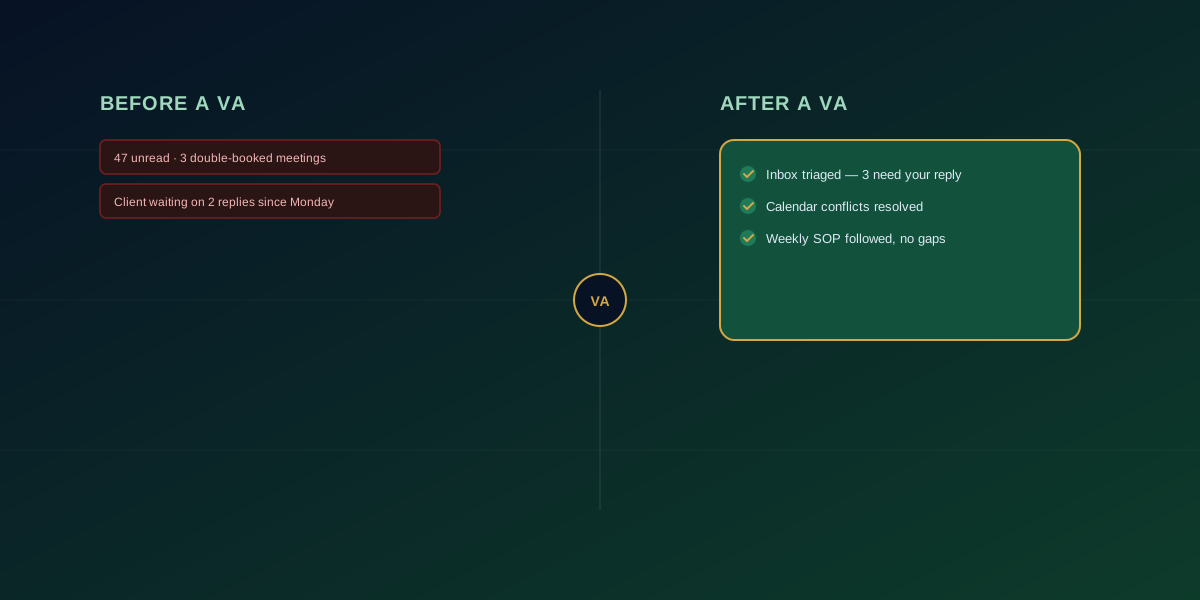
A real VA client hires for ownership of specific, recurring tasks: inbox triage, calendar management, research and light bookkeeping, all of which require trust with access to their email and files. A sample SOP or mock scheduling exercise proves this far better than the word "organised" on a CV. Never accept a role that asks you to receive and forward money on a client's behalf.
SchoolRegistry Editorial Team · Last updated: September 2026
This article reflects general, well-documented virtual assistant hiring patterns and tools as of the date above. Specific employer requirements and pay vary by client; verify a role's actual terms directly with the employer before accepting it.
You are organised. You reply fast. You have managed your own family's errands, your church's WhatsApp group, your cousin's small business orders, all without anyone calling it a job. Then you see "Virtual Assistant, remote, $500/month" and think, I already do this, unpaid, for people I am not even employed by. The skill transfer is real. What is missing is not ability, it is knowing exactly what a paying client expects a VA to own, and how to prove you can own it before they hand you access to their inbox and calendar.
What a Virtual Assistant Actually Gets Hired to Own
A real VA role is rarely "help with random tasks." Clients hire for specific, recurring ownership: inbox management, triaging and drafting replies so the client only sees what actually needs their attention; calendar and scheduling, coordinating meetings across time zones without double-booking; research and data organisation, turning a messy ask into a clean spreadsheet or document; basic bookkeeping or invoice tracking for a small business; and light project coordination, following up on tasks so nothing falls through. The common thread is trust with access: a client is handing over their email, calendar or files, so what gets you hired is proof you handle that responsibly and consistently, not just that you are "organised."
What clients actually check
Google Workspace, Calendly, Notion, Trello or Asana — named tools, not "good with computers."
Clear, professional email drafting a client can send without heavy editing.
Handling private inbox, financial or client information without leaks.
Key Terms, In Plain Language
- Inbox triage —
- sorting incoming email by urgency and drafting replies, so the client only handles what truly needs them.
- Calendar management —
- scheduling and protecting a client's time across meetings, often across different time zones.
- SOP (standard operating procedure) —
- a written, repeatable process a VA follows or creates so a task is done the same way every time.
How to Prove You Can Be Trusted With Someone's Inbox
Since the core of VA work is trust with access, the strongest evidence is not a claim, it is a demonstrated process. A sample SOP you wrote for a routine task, like "how I would manage a founder's inbox," complete with priority rules and draft-reply templates, shows exactly how you would operate before a client ever hands you real access. A mock calendar-coordination scenario, scheduling three fictional people across three time zones without conflict, demonstrates the actual skill. References or testimonials from informal work, even unpaid, that describe reliability and follow-through carry real weight, because reliability is what a client is actually buying.
Real VA Job vs. Scam: What to Check
A real VA client interviews you, even briefly, before granting inbox or calendar access; instant access requests with no conversation are a red flag. A real client pays a set rate or retainer through a recognised platform (Payoneer, Wise, Deel) or direct transfer, not by asking you to receive and forward money on their behalf, which is a specific scam pattern that shows up in VA-adjacent postings. A real client's business has a verifiable presence, a real website, a LinkedIn profile, or a referenceable history, not just a message that appeared in your inbox unprompted.
Myths vs. Facts
Myth
Being naturally organised is enough to get hired as a VA.
Fact
Clients hire for demonstrated tool fluency and a trustworthy process, not a personality trait. A sample SOP or mock scheduling exercise proves this far better than the word "organised" on a CV.
Myth
VA work is only basic admin, so it doesn't pay well.
Fact
Rates vary widely by scope and client, and VAs who manage higher-trust responsibilities, bookkeeping, project coordination, executive scheduling, command more than basic task-runners.
How to Become a Virtual Assistant in Nigeria: The 6-Step Path
Step 1: Pick your lane and audit your current skills (Week 1). List what you already do well, if you've ever managed a shop's WhatsApp orders, run a church or society's admin, or organized anything with spreadsheets, you have raw material. Map it to one of the five lanes above.
Step 2: Learn the core toolset (Weeks 1–4). Every VA job requires: Google Workspace or Microsoft 365, a CRM (HubSpot or similar), a project tool (Trello/Asana/ClickUp), professional email etiquette, and video-call professionalism. Your lane adds specialized tools on top.
Step 3: Get structured training with real practice (Weeks 1–8). Free YouTube content teaches tools; it doesn't teach client management, communication standards, or what to do when things go wrong, which is where clients actually fire people. A structured program with simulated client work compresses months of trial-and-error. (SchoolRegistry Academy's 8-week Virtual Assistant track is built exactly this way: tool training plus simulated client engagements plus a certification, for ₦200,000, with scholarship and sponsorship options if cost is a barrier.)
Step 4: Build proof (Weeks 6–8). Clients hire evidence, not promises. Assemble: a one-page profile, 2–3 work samples (mock inbox cleanup, sample CRM workflow, a process document you wrote), and your certification or references. This is the portfolio that gets you past "no experience."
Step 5: Land your first client (Weeks 8–12). Three channels, in order of reliability: (1) agencies and placement programs, slower start, steadier work, they handle client acquisition; (2) marketplaces (Upwork, Fiverr), global reach, brutal early competition, niche down hard; (3) direct outreach to Nigerian SMEs and diaspora-owned businesses, highest effort, best rates. Most working VAs combine channels.
Step 6: Raise rates through specialization (Months 3–12). The jump from ₦200K to ₦800K+ monthly comes from specialization: the VA who knows real-estate CRMs, the one who handles e-commerce ops, the one who manages executives' full schedules. Generalists plateau; specialists compound.
The realistic money picture (2026)
| Client type | Typical monthly (full-time equivalent) | Notes |
|---|---|---|
| Nigerian small business | ₦150,000–₦300,000 | Easiest to land, lowest ceiling |
| Nigerian startups/exec | ₦200,000–₦400,000 | Higher standards, faster growth |
| International (US/UK) via agency | $500–$1,000 (₦750K–₦1.5M) | Vetted placement, steady work |
| International direct clients | $800–$1,500+ (₦1.2M–₦2.3M) | Hardest to land, highest ceiling |
Figures reflect 2026 market rates across Nigerian VA communities and agency rate cards. The international premium exists because of time-zone overlap and English proficiency, West African working hours align with US mornings and UK afternoons, a structural advantage over Asian markets.
The 5 Mistakes That Keep Nigerian VAs Broke
- Marketing "I can do everything", clients hire lanes, not lists.
- Competing on price on marketplaces, a race to $3/hour you'll win and regret.
- No written scope, "small extra tasks" multiply until you're doing two jobs for one fee.
- Unreliable infrastructure, one missed client call from a power cut costs more than a backup MiFi and charged power bank ever will. Treat connectivity as business equipment, not an afterthought.
- Stopping at one client, client loss is a when, not an if. Always be lightly prospecting.
How SchoolRegistry Academy's Virtual Assistant Track Prepares You
The Virtual Assistant track is 8 weeks, tutor-graded, and built around real client scenarios: inbox triage practice, calendar coordination across time zones, SOP writing, and a graded portfolio you finish with, not just a claim. Every student also gets the Getting Hired: Career Readiness course at no extra cost.
Sources & Further Reading
- US Federal Trade Commission, Job Scams guidance — the primary reference for scam patterns targeting remote admin and payment-forwarding roles.
Frequently Asked Questions
Do I need a degree to become a virtual assistant?
No. Most clients care about demonstrated organisation, communication and tool fluency, not a specific degree.
What tools should I actually learn?
Google Workspace (Gmail, Calendar, Docs, Sheets), a scheduling tool like Calendly, and a task tool like Notion, Trello or Asana cover most client needs.
Is virtual assistant work legitimate remote work?
Yes, it is a real, widely-hired-for category. The scam risk concentrates in postings asking you to forward money or grant access before any real interview.
How is this different from customer service work?
Customer service is primarily client-facing communication and ticket resolution. VA work is primarily internal support, inbox, calendar, documents, for one client or founder rather than their customers.
How much do virtual assistants earn in Nigeria?
Nigerian VAs earn ₦150,000–₦400,000 monthly from local clients and $500–$1,500 monthly from international clients as of 2026. Earnings depend on specialization, client type, and reliability, specialized VAs serving international clients sit at the top of the range.
Do I need a certificate to become a virtual assistant?
No certificate is legally required, but structured certification with practical assessments dramatically shortens the path to your first client, because it substitutes for the experience you don't have yet. Clients hire evidence of capability; a good certification program produces exactly that evidence.
How long does it take to become a virtual assistant in Nigeria?
Realistically 8–12 weeks: 4–8 weeks of structured training and tool practice, 2–4 weeks of portfolio building and client outreach. Beware "start earning in 7 days" claims, the first weeks of any VA career are skill-building, not earning.
Can I be a virtual assistant with just my phone?
Not professionally. Clients expect spreadsheet work, document editing, video calls, and multi-tab research, a laptop is essential equipment. Budget for a basic laptop, backup power, and two internet sources (primary + MiFi backup) as your startup kit.
Which is better: Nigerian clients or foreign clients?
Foreign clients pay 3–5x more but demand stronger communication, reliability, and tool proficiency. The smart path: start with Nigerian or agency-placed clients to build real experience, then move upmarket to direct international clients within 6–12 months.
SchoolRegistry Academy, Quick Facts
Price
₦200,000
Format
Online, tutor-graded
Duration
8 weeks
Next cohort
Oct 1, 2026
Real inbox, calendar and SOP practice, plus a graded portfolio you can show a client.
See the Virtual Assistant track →