
Real remote work for Nigerians clusters into a handful of categories, and five simple checks catch most scams before you waste time or money. Here's the honest breakdown of what's real, what pays, and why qualified applicants still get filtered out.
Legit Online Jobs in Nigeria 2026: How to Tell Real Remote Work From a Scam
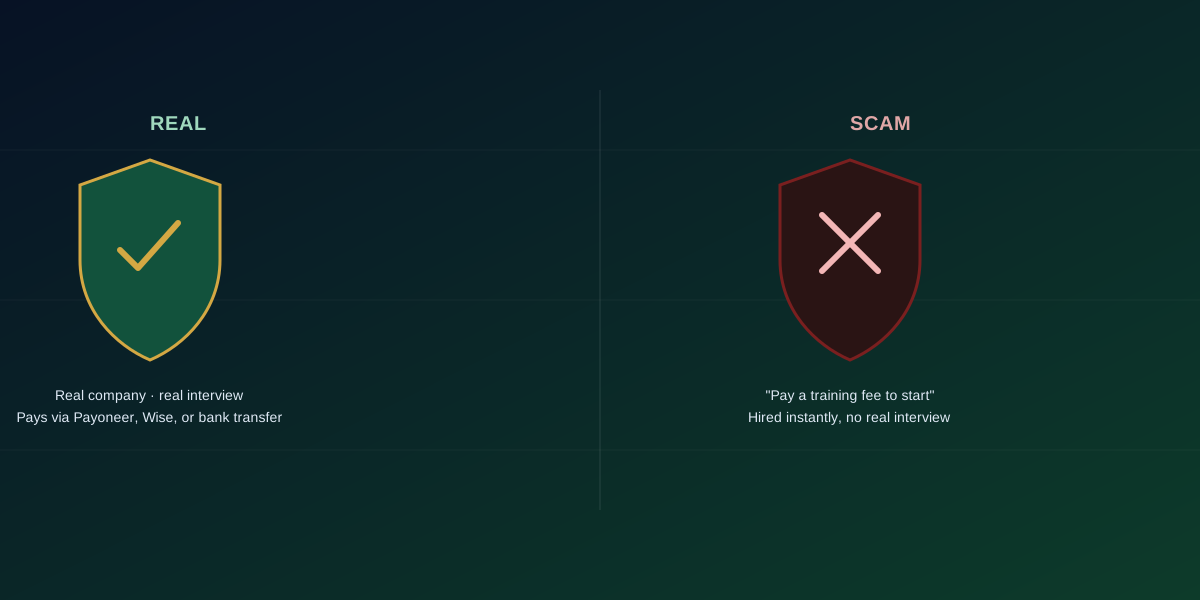
Real remote work for Nigerians clusters into a handful of categories: customer service, virtual assistance, IT support, social media management and lead generation. Five checks (company reviews, real website, LinkedIn presence, verifiable interview, no upfront payment) catch most scams. The bigger, honest problem for qualified applicants is ATS filtering from a generic CV, not a lack of real jobs.
SchoolRegistry Editorial Team · Last updated: September 2026
This article describes general, well-documented online job scam patterns and legitimate remote-work categories as of the date above. Always verify a specific employer or platform independently before sharing personal information or paying any fee.
Search "online jobs in Nigeria" and the first page is a minefield. Data entry roles paying suspiciously well for zero skill. Forex trading groups disguised as jobs. "Click here to start earning today" pages that want your bank details before they want your resume. Somewhere in that noise, real remote jobs from real companies do exist, and Nigerians are working them right now, getting paid in dollars, building careers that do not depend on relocating. The problem was never that legitimate online work doesn't exist. The problem is that the scams are louder, better funded on ads, and specifically built to look exactly like the real thing.
The Real Categories of Online Work Nigerians Are Actually Getting Hired For
Strip away the noise and legitimate remote work for Nigerians clusters into a handful of real categories, each with its own real hiring pattern. Customer service and support, handling chat and email tickets for companies that need coverage across timezones. Virtual assistance, managing calendars, inboxes and admin tasks for founders and small businesses who cannot afford a full-time in-house hire. IT support, handling tier-1 helpdesk tickets, password resets and basic troubleshooting for companies running distributed teams. Social media management, running content calendars and community engagement for brands that outsource the work rather than hire locally. Lead generation and appointment setting, the sales-adjacent work of finding and qualifying prospects before a closer takes over. Every one of these is a real, currently-hired-for role category, and every one of them is also the exact cover story scammers use, which is precisely why knowing the real shape of the job matters.
Key Terms, In Plain Language
- Legit employer verification —
- confirming a company is real before applying: a working website, a real LinkedIn presence, reviews or news mentions that predate the job posting.
- Advance-fee scam —
- any "job" that asks you to pay before you are hired, for training, a starter kit, software, or a background check.
- Payment platform —
- a legitimate international payout service (Payoneer, Wise, Deel, direct bank transfer) a real remote employer actually uses.
- Task-based scam —
- a fake "job" disguised as data entry or product reviews that actually asks you to deposit your own money to "unlock" higher-paying tasks.
How to Verify a Job Is Real Before You Spend a Week On It
Five checks catch the overwhelming majority of scams before you waste time or money. Search the company name plus "reviews" or "scam" and read what comes up, not just the top result. Check whether the company has a real website separate from the job posting, with a real product or service described on it, not just a page that exists to collect applications. Look for the company on LinkedIn and check whether real employees, not just the recruiter, have profiles that predate the job posting by months or years. Confirm the interview happens somewhere verifiable, a real video call, not only a chat app with no camera ever turned on. And treat any request for payment, of any kind, before you are formally hired, as a hard stop, no matter how the request is framed.
What Legitimate Remote Work Actually Pays
Entry-level remote roles in customer service, virtual assistance and IT support hired by US or UK companies commonly pay in a range that, converted to naira, sits well above local entry-level office pay for equivalent effort, though exact figures vary widely by company, hours and experience and should never be taken as a guarantee. What stays consistent is the payment method: real employers pay through recognised international platforms or direct transfer, on a predictable schedule, not through crypto wallets, gift cards, or "commission on tasks you complete."
Why Legitimate Remote Work Is Genuinely Hard to Break Into, Even When You Are Qualified
This part deserves honesty rather than a pep talk. Real remote job postings from known companies can draw thousands of applicants within days, filtered first by software, then by a recruiter skimming for keyword matches to the job description. A generic CV with no specific tool named, no measurable outcome stated, gets filtered out before a human reads it, regardless of how capable the applicant actually is. This is not a Nigeria-specific problem, and it is not evidence the roles are fake. It is evidence that a generic application strategy does not survive contact with how these companies actually hire, and that the fix is a sharper, tool-specific, evidence-backed application, not applying to more postings with the same weak CV.
Myths vs. Facts
Myth
Most "online jobs" you find by searching are scams, so real remote work barely exists for Nigerians.
Fact
Real remote roles exist in significant volume across customer service, VA work, IT support, social media and lead generation. Scams are simply louder and better funded on ads, which skews what you see first.
Myth
A legitimate employer would never ask for any payment or personal detail upfront.
Fact
A real employer may reasonably ask for ID for tax or compliance purposes once you are formally hired. What they never do is ask you to pay money, of any kind, before that point.
Myth
If you keep applying to enough postings, volume alone will eventually land you a role.
Fact
A weak, generic CV filtered out at postings 1 through 50 will be filtered out at posting 51 too. A sharper, evidence-backed application to fewer, verified postings consistently outperforms blind volume.
Where SchoolRegistry Academy Fits
SchoolRegistry Academy runs five 8-week certification tracks mapped directly to the real categories above: customer service and call centre work, virtual assistant support, social media management, lead generation and appointment setting, and Tier-1 IT support. Every track includes real, tutor-graded practical assessments, so what you finish with is evidence an employer can check, not just a claim on a CV. Every student also gets the Getting Hired: Career Readiness course at no extra cost, covering exactly the verification and application skills in this article: how to build an evidence-backed CV, how to spot a scam posting before you waste time on it, and how to prepare for a real interview. The next cohort begins October 1, 2026.
Sources & Further Reading
- US Federal Trade Commission, Job Scams guidance — the primary reference for advance-fee and task-based job scam patterns.
- FTC Consumer Advice: Job Scams — a plain-language checklist for verifying a job posting before applying.
Frequently Asked Questions
Are online jobs in Nigeria actually legitimate?
Yes, for a real and growing set of roles in customer service, virtual assistance, IT support and related categories, hired by companies abroad who need distributed coverage. The legitimacy depends on the specific employer, not the category of work.
What is the single biggest red flag to watch for?
Any request for payment, of any kind, before you are formally hired. This single check filters out the large majority of scam postings.
Do I need a degree to work online for a foreign company?
Not for most entry-level customer service, VA, or IT support roles. What matters more is demonstrated skill with the specific tools the role uses, and evidence you can communicate clearly in writing.
How long does it realistically take to land a legitimate remote role?
It varies widely and no honest source can promise a timeline. What consistently shortens it is a sharper, tool-specific application and a real, checkable portfolio, rather than applying broadly with a generic CV.
SchoolRegistry Academy, Quick Facts
Price
₦200,000
Format
Online, tutor-graded
Duration
8 weeks
Next cohort
Oct 1, 2026
Five remote-work tracks, real practical assessments, and the Getting Hired course included at no extra cost.
See the Academy tracks →