
You're already the relative who fixes everyone's WiFi and phones. Here's what Tier-1 IT support actually means as a paid remote job, what ticketing systems and SLAs are, and how to turn informal tech-fixing experience into real, checkable evidence.
Remote IT Support Jobs in Nigeria: How to Turn Free Family Tech Support Into a Paid Tier-1 Role (2026 Guide)
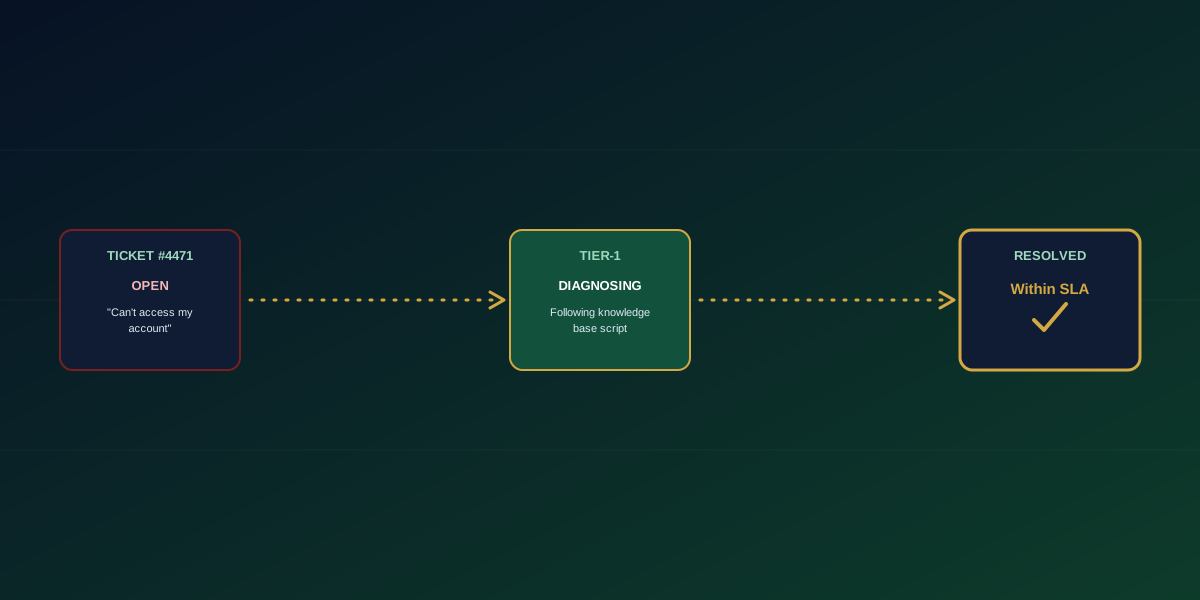
Tier-1 IT support means resolving common, documented issues (password resets, connectivity, account access) through a ticketing system against a service-level agreement, and knowing exactly when to escalate rather than guess. Informal tech support for family and friends is real, checkable evidence when described specifically. No computer science degree is required for most entry-level roles.
SchoolRegistry Editorial Team · Last updated: September 2026
This article reflects general, well-documented Tier-1 IT support hiring patterns and tools as of the date above. Specific employer requirements and stacks vary by company; verify a role's actual terms directly with the employer before accepting it.
You fix your family's phones, reset everyone's WiFi, and you are the one relative who gets called when a laptop won't turn on. That is real, informal IT support experience, and it is closer to a paid Tier-1 help desk job than most people realise. The gap is not technical ability, it is not knowing that "IT support" as a remote job title means a very specific, structured way of doing what you already do for free: through a ticketing system, against a service-level agreement, following a documented process.
What "Tier-1 IT Support" Actually Means
Tier-1 is the first line of contact for common, well-documented problems: password resets, software installation issues, basic network connectivity, account access requests, and walking a user through a known fix using a script or knowledge base article. It is not deep systems engineering or writing code. The job is measured on ticket volume handled, resolution time, and how accurately you escalate what you genuinely cannot fix to Tier-2, rather than guessing or leaving the user stuck. Employers hiring remote Tier-1 support want someone who can follow a documented troubleshooting process calmly, communicate clearly with a frustrated user, and know exactly when to hand a problem up rather than making it worse by improvising.
What the job actually runs on
Zendesk, Freshservice, or Jira Service Management — the software the job actually runs on.
A time target for first response and resolution that your work is measured against.
Knowing exactly when to hand a ticket to Tier-2 rather than guessing.
Key Terms, In Plain Language
- Tier-1 / Tier-2 —
- Tier-1 handles common, documented issues; Tier-2 handles deeper technical problems Tier-1 escalates.
- Knowledge base —
- a documented library of known issues and their fixes that a support agent follows.
- SLA —
- service-level agreement, the time targets a support team is measured against for response and resolution.
What Counts as Real Evidence Without a Formal IT Job
Fixing devices for family and friends is real evidence when you describe it specifically: "resolved Wi-Fi, printer and account-access issues for 15+ households, diagnosing each before applying a fix" is a concrete, checkable claim. A free certification like CompTIA A+ study material, even without sitting the paid exam yet, demonstrates real technical grounding. A documented troubleshooting log you kept for your own experience, listing common issues and how you resolved them, mirrors exactly what a real knowledge base looks like and shows you already think in the structure the job requires.
Myths vs. Facts
Myth
You need a computer science degree to get a remote IT support job.
Fact
Most Tier-1 roles ask for demonstrated troubleshooting ability and calm communication, not a specific degree. Certifications and real evidence of past fixes matter more.
Myth
Fixing your family's devices for free doesn't count as real experience.
Fact
Described specifically, with the number of people helped and the types of issues resolved, informal tech support is real, checkable evidence of the exact skill Tier-1 roles hire for.
How SchoolRegistry Academy's IT Support Track Prepares You
The Tier-1 IT Support track is 8 weeks, tutor-graded, and built around real ticketing-system practice, documented troubleshooting scenarios, and SLA-based response drills, so you finish with a graded portfolio, not just a claim. Every student also gets the Getting Hired: Career Readiness course at no extra cost.
Sources & Further Reading
- US Federal Trade Commission, Job Scams guidance — the primary reference for scam patterns in remote technical-support postings.
Frequently Asked Questions
Do I need a certification like CompTIA A+ to get hired?
It helps and signals real technical grounding, but many entry-level Tier-1 roles will accept demonstrated troubleshooting ability without a formal certification, especially with a real portfolio.
What is the difference between Tier-1 and Tier-2 support?
Tier-1 handles common, documented issues following a known process. Tier-2 handles deeper technical problems that Tier-1 escalates when a standard fix doesn't resolve the issue.
Is remote IT support legitimate work?
Yes, it is a real, widely-hired-for category for companies running distributed teams. Verify any employer independently before applying, as with any remote role.
What tools should I actually learn?
A ticketing platform like Zendesk or Freshservice, basic Windows and Mac troubleshooting, and familiarity with common SaaS account-access issues cover most entry-level roles.
SchoolRegistry Academy, Quick Facts
Price
₦200,000
Format
Online, tutor-graded
Duration
8 weeks
Next cohort
Oct 1, 2026
Real ticketing-system practice and SLA-based drills, plus a graded portfolio you can show an employer.
See the IT Support track →