
Remote customer service roles are mostly chat and email, not phone calls, and most rejections come from CV filtering, not lack of skill. Here's what employers actually hire against, and how to tell a real posting from a scam.
Customer Service Remote Jobs in Nigeria: Why You're Getting Rejected, and the Real Fix (2026 Guide)
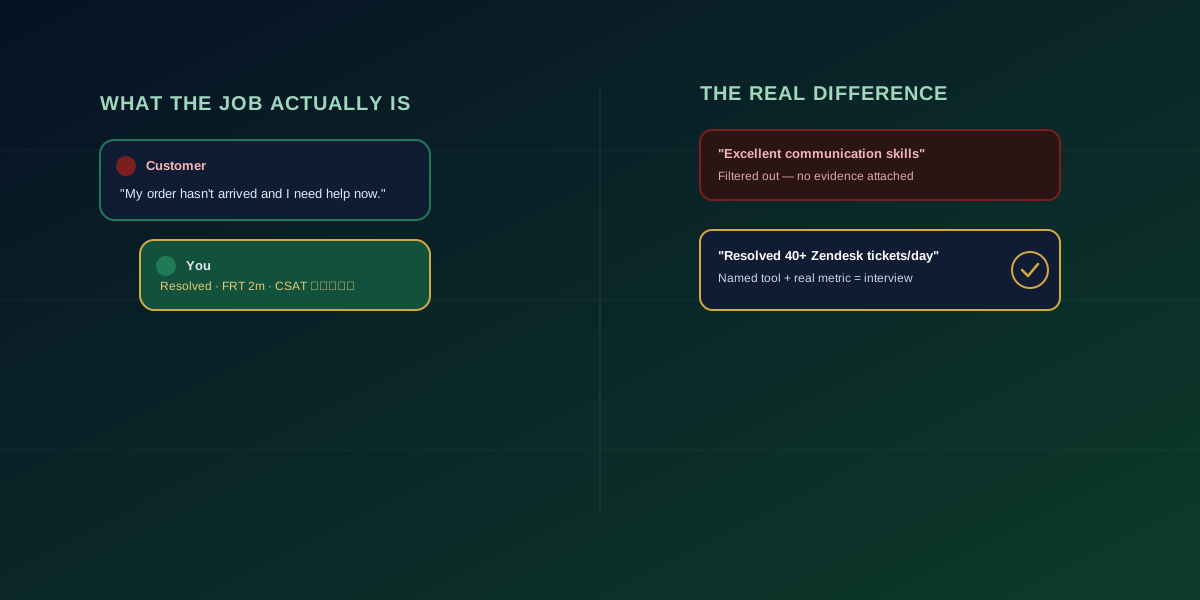
Remote customer service roles are mostly chat and email led, not phone-first, so written communication matters more than accent. Rejections usually come from applicant-tracking-system filtering or a generic CV, not lack of ability. A CV with named tools and real metrics, plus a short writing sample, consistently outperforms a generic one. Never pay any fee before you're hired — that's the single most reliable scam signal.
SchoolRegistry Editorial Team · Last updated: September 2026
This article reflects real, publicly available US remote customer-service pay data and hiring patterns as of the date above. Individual employer requirements and pay change constantly; always verify a specific role's terms directly with the employer before accepting it.
You have applied to forty-something customer service jobs this month. Some wanted "US accent required," which nobody will say to your face but everyone means. Some wanted two years of experience for an entry-level remote role that pays less than a bad day at a call centre in Lagos would. A few were outright scams, asking for a "training fee" before they would even schedule an interview. You are not bad at this. The market you are applying into is genuinely built to filter out people who look exactly like you on paper, whether or not that is fair, and understanding exactly how it filters is the first real step to getting past it.
What "Remote Customer Service" Actually Means to the Company Hiring
When a US or UK company advertises a remote customer service role, they are almost never picturing a call centre. They mean someone who can handle live chat, email tickets, and occasional voice calls through a browser-based tool like Zendesk, Intercom or Freshdesk, working their timezone's business hours or an agreed overlap window. The job is measured on response time, resolution rate and customer satisfaction score, not on how many calls you took in an hour. That distinction matters because it changes what you need to prove: not that you can talk fast, but that you can write clearly, stay calm with an angry customer, and follow a process without needing to be told twice.
Remote customer service, in numbers
Zendesk, Intercom, Freshdesk, Gorgias — the software, not the phone, is the real skill test.
Most roles are chat and email led. Grammar and tone carry more weight than accent.
CSAT (customer satisfaction score), first-response time and resolution rate are what your manager actually tracks.
Key Terms, In Plain Language
- CSAT —
- Customer Satisfaction Score, usually a 1-5 rating a customer leaves after your response.
- Ticket —
- a single customer request or complaint tracked inside a helpdesk tool from open to resolved.
- First response time (FRT) —
- how long it takes an agent to send the customer's first reply after a ticket is opened.
- Overlap hours —
- the portion of your workday that must line up with the employer's business hours, even across timezones.
Why You Are Actually Getting Rejected
Three reasons account for most of it, and only one of them is about you. First, volume: a posted remote customer service role from a known company can pull thousands of applications in days, and most are filtered by an applicant tracking system before a human ever reads them, often on keyword match to the job description. Second, unverifiable claims: a CV that says "excellent communication skills" with no evidence attached reads identically to every other CV in the pile, so it gets skipped. Third, and this is the one worth being honest about: some roles genuinely do carry accent or timezone bias, spoken or not, and no amount of skill fixes a filter that was never about skill in the first place. You cannot control the third one. You can control the first two, and that is where the actual leverage is.
What Actually Moves You From "Applicant" to "Interview"
A CV that names the actual tools (Zendesk, not "customer service software"), states a real metric from any past role even if it is retail or informal work ("resolved customer complaints for an average of 40 walk-in customers a day"), and includes one short, specific writing sample outperforms a generic CV by a wide margin, because it gives the screener something concrete to match against the job description. A short, recorded response to a mock customer complaint, even unsolicited, attached as a link, does more to prove you can write and de-escalate than any adjective on a CV. Employers hiring remote support are trying to solve one problem: can this person handle an upset customer, in writing, without supervision, and not make it worse. Anything you can show that answers that question directly moves you ahead of people who only claim it.
How to Tell a Real Remote Customer Service Job From a Scam
The pattern repeats often enough to name plainly. A real employer never asks you to pay for training, equipment, a "starter kit," or a background check before you are hired; if a fee comes up before an offer, it is not a real job. A real employer interviews you, even briefly, before extending an offer; an instant "you're hired" after a single chat message is a red flag, not good luck. A real employer pays into a bank account or a recognised payment platform (Deel, Payoneer, Wise), never asks you to receive and forward customer payments as part of the role, and never asks you to buy gift cards on their behalf. If a "recruiter" contacts you first, unprompted, for a job you never applied to, verify the company's own careers page independently before replying.
Myths vs. Facts
Myth
You need a "neutral" or American accent to get hired for remote customer service.
Fact
Most remote support roles are chat and email first. Clear written English and calm de-escalation skills matter more than accent for the majority of postings.
Myth
No formal call-centre experience means you have nothing worth putting on your CV.
Fact
Any role where you handled complaints, resolved disputes, or managed a queue of requests, retail, admin, even a class WhatsApp group you ran, is real evidence if you describe it with a specific outcome.
Myth
If a job offer comes fast with no real interview, that is just an efficient employer.
Fact
Legitimate remote employers verify a candidate can write and think under pressure before hiring. An offer with zero screening is the single most common scam pattern.
How SchoolRegistry Academy's Customer Service Track Closes the Gap
The Customer Service & Call Center track is 8 weeks, tutor-graded, and built around the actual tools and metrics US employers hire against: real practice tickets in a helpdesk-style interface, mock live-chat scenarios with an angry customer, and a graded written response portfolio you can point an employer to directly, not just claim. Every student also gets the Getting Hired: Career Readiness course at no extra cost, covering how to build the CV and portfolio that actually clears an applicant tracking system, and how to spot a scam posting before you waste a week on it.
Sources & Further Reading
- US Federal Trade Commission, Job Scams guidance — the official reference for common remote-job scam patterns, including upfront-fee and gift-card scams.
- Zendesk and Intercom — the two most commonly required helpdesk platforms in remote customer service job postings; both publish free product overviews worth studying before an interview.
Frequently Asked Questions
Do I need a degree for remote customer service jobs?
No. Most postings ask for a high school certificate or equivalent, plus demonstrated communication skills. A degree is rarely a hard requirement for entry-level support roles.
What equipment do I actually need?
A laptop or desktop with a stable internet connection, a working microphone and headset, and a quiet space during your working hours. A real employer will never ask you to buy this equipment from them.
Is remote customer service work legitimate, or mostly scams?
The roles themselves are real and widely hired for by legitimate companies. The scam rate is high specifically in unsolicited messages and postings with no real company presence, which is why verifying the employer independently matters before you apply.
How is this different from a Nigerian call centre job?
Pay, tools and structure differ. Remote roles for US or UK companies typically pay in dollars or pounds, use browser-based helpdesk software instead of a phone queue, and are measured on written resolution quality rather than call volume.
SchoolRegistry Academy, Quick Facts
Price
₦200,000
Format
Online, tutor-graded
Duration
8 weeks
Next cohort
Oct 1, 2026
Real ticket practice, live-chat scenarios and a graded portfolio you can show an employer, plus the Getting Hired course at no extra cost.
See the Customer Service track →