
Every posting wants experience you can't get without a first job. Here's what "experience required" is really filtering for, what counts as real evidence when you have no job history, and why a graded practical assessment closes the gap faster than waiting.
Remote Jobs With No Experience in Nigeria: How to Actually Get Past the "1-2 Years Required" Wall (2026 Guide)
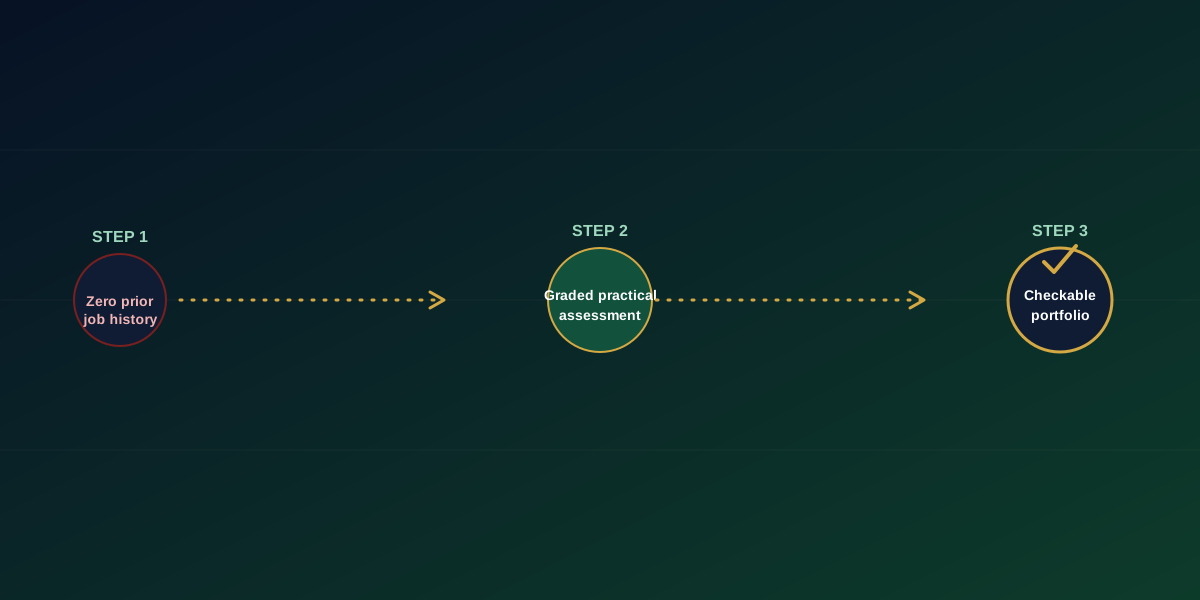
"Experience required" usually filters for process discipline, communication and low onboarding cost, not a specific prior job title. Retail, informal work, volunteering and completed practical assessments all count as real evidence when described with a specific outcome. High applicant volume and software filtering reject strong candidates constantly, so a sharper, evidence-backed application matters more than applying to everything.
SchoolRegistry Editorial Team · Last updated: September 2026
This article reflects general, well-documented entry-level remote hiring patterns as of the date above. Specific employer requirements change constantly; verify a role's actual terms directly with the employer before applying or accepting.
Every posting says "1-2 years experience required." You have zero years, because nobody will give you the first year without the experience the first year would have given you. This is not a uniquely Nigerian problem or a uniquely remote-work problem, it is the oldest contradiction in hiring, and it has a real answer that has nothing to do with lying on your CV or waiting around for someone to take a chance on you out of kindness.
What "Experience Required" Actually Filters For
Most entry-level postings that list a year or two of experience are not actually testing whether you held a specific job title before. They are using "experience" as a cheap proxy for three real things: can you follow a process without being told twice, can you communicate clearly under mild pressure, and will you need constant hand-holding in the first month. All three of those can be demonstrated without a prior job, which is the entire reason a portfolio, a practical assessment, or a real certification with graded work closes this gap faster than waiting for someone to overlook the requirement.
Key Terms, In Plain Language
- Transferable evidence —
- proof of a skill from outside a formal job, school projects, volunteer work, a class you ran, that demonstrates the same underlying ability an employer wants.
- Practical assessment —
- a graded task or project completed during training that an employer can review directly, instead of taking your word for a skill.
- Entry-level filter —
- the specific things a "1-2 years experience" requirement is usually really testing for: process discipline, communication, and low onboarding cost.
What Actually Counts as Evidence When You Have No Job History
Retail, informal trading, running a school society, tutoring, managing a family business's WhatsApp orders, moderating a Facebook group, all of it is real evidence if you describe it with a specific, honest outcome rather than a vague adjective. "Handled customer complaints for an average of 30 walk-in customers a day" is a real, checkable claim. "Great with people" is not. A completed, graded practical assessment from a real training programme is stronger still, because it gives an employer something to look at directly rather than take on faith. The goal is never to pretend you have formal experience you do not have; it is to show the underlying skill through whatever real evidence you actually have.
Why You Can Do Everything Right and Still Get Filtered Out
This deserves honesty rather than encouragement alone. A posted entry-level remote role from a known company can pull thousands of applications within days, filtered first by software matching keywords to the job description, then by a recruiter skimming quickly. A strong, evidence-backed application can still lose to volume and bad timing, and that is not a reflection of your actual capability. What changes your odds is not applying to more postings with the same generic CV, it is a sharper application, a real practical assessment attached, and applying to roles where the requirement genuinely matches what you can show, rather than every posting regardless of fit.
Myths vs. Facts
Myth
"No experience required" postings are always entry-level roles anyone can get.
Fact
"No experience required" is also a phrase scam postings use heavily, precisely because it attracts a large pool of hopeful applicants. Verify the employer independently regardless of how the posting is worded.
Myth
Without a prior job title, you have nothing real to put on a CV.
Fact
Retail, informal work, volunteering and completed practical assessments are all real, checkable evidence when described with a specific outcome rather than a vague claim.
Myth
Getting rejected from entry-level roles despite trying hard means you are not good enough.
Fact
High applicant volume and software filtering reject strong candidates constantly. A sharper, evidence-backed application to better-matched roles changes your odds more than persistence alone.
How SchoolRegistry Academy Builds Real Evidence From Zero
SchoolRegistry Academy runs five 8-week certification tracks: customer service and call centre work, virtual assistant support, social media management, lead generation and appointment setting, and Tier-1 IT support. Every track includes real, tutor-graded practical assessments, so what you finish with is a checkable portfolio, not a claim, regardless of whether you have ever held a formal job before. The Getting Hired: Career Readiness course is included at no extra cost, covering exactly how to turn non-traditional experience into a real, evidence-backed application.
Sources & Further Reading
- US Federal Trade Commission, Job Scams guidance — the primary reference for scam patterns that specifically target "no experience needed" job seekers.
Frequently Asked Questions
Can I really get a remote job with zero prior work experience?
Yes, for entry-level roles in customer service, virtual assistance, IT support and related categories, especially when you can show a real, graded practical assessment instead of only a claim.
Should I lie about experience to get past a filter?
No. A fabricated claim that falls apart in an interview or on the job costs you far more than being honest about real, non-traditional evidence.
What is the fastest way to build real evidence from nothing?
A short, structured certification with graded practical assessments gives you checkable evidence faster than waiting for an employer to take an unverified chance on you.
How do I know if a "no experience" posting is a scam?
The same checks apply regardless of the experience requirement: verify the company independently, and never pay any fee before you are formally hired.
SchoolRegistry Academy, Quick Facts
Price
₦200,000
Format
Online, tutor-graded
Duration
8 weeks
Next cohort
Oct 1, 2026
No prior job history required. Five tracks that build real, graded evidence from zero.
See the Academy tracks →